Sponsored
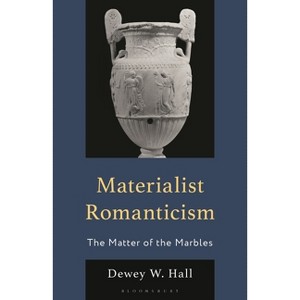
Materialist Romanticism - by Dewey W Hall Hardcover
In Stock
Sponsored
About this item
Highlights
- A matter-based approach to the study of nineteenth-century Romantic artifacts centering on the removal of the Parthenon sculptures from Athens, Greece by Thomas Bruce, the 7th Earl of Elgin, and sale of the prized artifacts to the British Parliament for £35,000 in 1816.
- About the Author: Dewey W. Hall is Professor of English at California State Polytechnic University, Pomona.
- 148 Pages
- Literary Criticism, European
Description
About the Book
A study of nineteenth-century Romantic literary artifacts centering on the removal of Parthenon sculptures from Athens and sale of the prized artifacts to the British Parliament.
Book Synopsis
A matter-based approach to the study of nineteenth-century Romantic artifacts centering on the removal of the Parthenon sculptures from Athens, Greece by Thomas Bruce, the 7th Earl of Elgin, and sale of the prized artifacts to the British Parliament for £35,000 in 1816.
Dewey W. Hall delves into the intrigue surrounding the famed sculptures by reaching back in time to Democritus (460-370 B.C.), Aristotle (384-322 B.C.), and Epicurus (341-271 B.C.) who theorized about the atom-the basis for the materialist tradition-and Lucretius's notion of the swerve in De Rerum Natura (Of the Nature of Things) (c. 55-49 B.C.). This study includes various artistic responses to the Parthenon sculptures via the verbal and visual as represented through George Gordon, Lord Byron's Curse of Minerva (1811) and Childe Harold's Pilgrimage (1812), Benjamin Robert Haydon's sketches of the horse of Selene (1809) held at the British Museum, and John Keats's Endymion (1818) and "Ode on a Grecian Urn" (1819).
Review Quotes
"Taking up the material, historical, cultural, political, artistic and literary case of the Elgin Marbles, Materialist Romanticism tracks the material traces of the marbles, from their origin in the Pentelic quarries that supplied the Periclean building program, to Lord Elgin's controversial acquisition of them more than two millennia later. Dewey Hall moves fluently among archives and discourses, and integrates his deft readings of famous poems by Byron and Keats into an investigation capacious enough to consider phenomena as disparate as the chemical composition of marble and the massive eruption of Mount Tambora, which blighted harvests across Europe and thereby indirectly contributed to the debate surrounding the British Museum's purchase of the sculptures in 1816." --Marc Redfield, Florence Pirce Grant University Professor of English and Comparative Literature, Brown University, USA
About the Author
Dewey W. Hall is Professor of English at California State Polytechnic University, Pomona.
Shipping details
Return details
Frequently bought together




Trending Entertainment New Arrivals