Sponsored
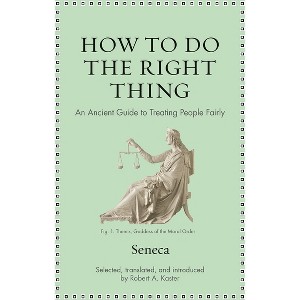
How to Do the Right Thing - (Ancient Wisdom for Modern Readers) by Seneca (Hardcover)
In Stock
Sponsored
About this item
Highlights
- How ancient Stoicism can help teach us to treat others--and ourselves--more fairly and mercifully There are times when we've all felt that we haven't been treated as we deserve--that we've been misjudged, shortchanged, or given a raw deal.
- About the Author: Robert A. Kaster is professor emeritus of classics and Kennedy Foundation Professor Emeritus of Latin at Princeton University.
- 288 Pages
- Philosophy, History & Surveys
- Series Name: Ancient Wisdom for Modern Readers
Description
About the Book
"It doesn't take long after learning to speak for children to utter the cry, "That's not fair!" That familiar exclamation seems to emerge from a primal human sense: you know how you deserve to be treated, and you know that you have not been treated that way-you've been given a raw deal, you've not been done right by. In this volume for our Ancient Wisdom for Modern Readers series, Robert Kaster explores how we treat others at the everyday, person-to-person level, taking as his source the ethical writings of the Stoic philosopher Seneca. Though Seneca does not quite address the demands of "fairness" as the central topic in any of his ethical writings, relevant principles and words of advice appear throughout them. Kaster has selected passages from "On Benefits" and "On Mercy," the twelve short essays on disparate themes collected in his "Dialogues," and the most influential of his works, the "Moral Epistles." He takes as his organizing principle one of the key premises of Stoic thought: you cannot do right by others unless you sort yourself out first, and sorting yourself out begins and ends with your mind. Doing right by others requires cultivating a great mind (magnus animus) and achieving magnanimity (magnanimitas), the quality that ensures (among other things) that one always give others what they deserve-in every way, from material goods to personal respect, and even punishment. He has organized the selections into five chapters, each giving a different view of doing the right thing when it comes to our relations with others: "Striving for Magnanimity"; "Being Calm, Thinking Clearly"; "Judging Yourself Fairly"; "Doing Right by Others"; and "Being Merciful.""--
Book Synopsis
How ancient Stoicism can help teach us to treat others--and ourselves--more fairly and mercifully
There are times when we've all felt that we haven't been treated as we deserve--that we've been misjudged, shortchanged, or given a raw deal. And, at one time or another, other people have probably felt that we've treated them just as unfairly. How to Do the Right Thing draws on the principles of ancient Stoicism as articulated by the Roman statesman and philosopher Seneca to help readers better navigate one of the most important practical questions of daily life--how to do right by others.
Starting from the virtue of magnanimity--the opposite of small-mindedness--How to Do the Right Thing draws together lessons from Seneca's writings that stress the importance of calm and clear thinking, of judging oneself fairly before judging others, and of cutting people slack, with a bias toward mercy--all delivered in crisp and lively new translations, and with the original Latin on facing pages.
Review Quotes
"Kaster creates a meaningful and original tapestry of Senecan thought. . . . His translations are precise, stylistically appealing, and incredibly clever in reproducing the readability and affective impact of the original--a model to emulate. He allows himself the freedom to give Seneca an English voice that speaks to modern readers."---Jula Wildberger, Bryn Mawr Classical Review
"Excellent."---David Lorimer, Paradigm Explorer
"Drawing widely on Seneca's Dialogues (i.e. essays) and his 120 Moral Epistles, [Kaster] discusses the question of fairness under five headings, each with a brief introduction...all beautifully elucidated."---Susan S. Meyer, Classics For All
About the Author
Robert A. Kaster is professor emeritus of classics and Kennedy Foundation Professor Emeritus of Latin at Princeton University. His books include The Appian Way: Ghost Road, Queen of Roads and (with Martha C. Nussbaum) Seneca: Anger, Mercy, Revenge.
Shipping details
Return details
Frequently bought together




Discover more options