Sponsored
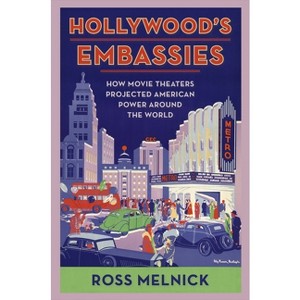
Hollywood's Embassies - Film and Culture by Ross Melnick Paperback
In Stock
Sponsored
About this item
Highlights
- Beginning in the 1920s, audiences around the globe were seduced not only by Hollywood films but also by lavish movie theaters that were owned and operated by the major American film companies.
- About the Author: Ross Melnick is associate professor of film and media studies at the University of California, Santa Barbara.
- 496 Pages
- Performing Arts, Film
- Series Name: Film and Culture
Description
About the Book
"Beginning in the 1920s, audiences around the globe were seduced not only by Hollywood films but also by lavish movie theaters that were owned and operated by the major American film companies. These theaters aimed to provide a quintessentially "American" experience. Outfitted with American technology and accoutrements, they allowed local audiences to watch American films in an American-owned cinema in a distinctly American way. In a history that stretches from Buenos Aires and Tokyo to Johannesburg and Cairo, Ross Melnick considers these movie houses as cultural embassies. He examines how the exhibition of Hollywood films became a constant flow of political and consumerist messaging, selling American ideas, products, and power, especially during fractious eras. Melnick demonstrates that while Hollywood's marketing of luxury and consumption often struck a chord with local audiences, it was also frequently tone-deaf to new social, cultural, racial, and political movements. He argues that the story of Hollywood's global cinemas is not a simple narrative of cultural and industrial indoctrination and colonization. Instead, it is one of negotiation, booms and busts, successes and failures, adoptions and rejections, and a precursor to later conflicts over the spread of American consumer culture. A truly global account, Hollywood's Embassies shows how the entanglement of worldwide movie theaters with American empire offers a new way of understanding film history and the history of U.S. soft power"--
Book Synopsis
Beginning in the 1920s, audiences around the globe were seduced not only by Hollywood films but also by lavish movie theaters that were owned and operated by the major American film companies. These theaters aimed to provide a quintessentially "American" experience. Outfitted with American technology and accoutrements, they allowed local audiences to watch American films in an American-owned cinema in a distinctly American way.
In a history that stretches from Buenos Aires and Tokyo to Johannesburg and Cairo, Ross Melnick considers these movie houses as cultural embassies. He examines how the exhibition of Hollywood films became a constant flow of political and consumerist messaging, selling American ideas, products, and power, especially during fractious eras. Melnick demonstrates that while Hollywood's marketing of luxury and consumption often struck a chord with local audiences, it was also frequently tone-deaf to new social, cultural, racial, and political movements. He argues that the story of Hollywood's global cinemas is not a simple narrative of cultural and industrial indoctrination and colonization. Instead, it is one of negotiation, booms and busts, successes and failures, adoptions and rejections, and a precursor to later conflicts over the spread of American consumer culture. A truly global account, Hollywood's Embassies shows how the entanglement of worldwide movie theaters with American empire offers a new way of understanding film history and the history of U.S. soft power.
Review Quotes
Captivating and ambitious, Hollywood's Embassies covers a fascinating breadth of global territory as it explores the way Hollywood displayed America to the world.--Kathy Fuller-Seeley, author of Jack Benny and the Golden Age of American Radio Comedy
About the Author
Ross Melnick is associate professor of film and media studies at the University of California, Santa Barbara. He is the author of American Showman: Samuel "Roxy" Rothafel and the Birth of the Entertainment Industry, 1908-1935 (Columbia, 2012).
Shipping details
Return details
Frequently bought together