Students and other readers will learn about the common foodstuffs available, how and what they cooked, ate, and drank, what the regional cuisines were like, how the different classes entertained and celebrated, and what restrictions they followed for health and faith reasons.
About the Author: MELITTA WEISS ADAMSON is Professor of Modern Languages and Literatures at the University of Western Ontario.
288 Pages
Cooking + Food + Wine, History
Series Name: Food Through History
Description
About the Book
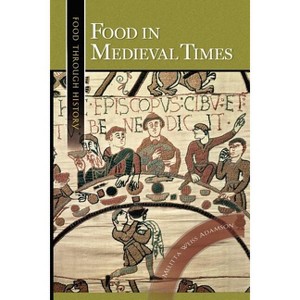
Students and other readers will learn about the common foodstuffs available, how and what they cooked, ate, and drank, what the regional cuisines were like, how the different classes entertained and celebrated, and what restrictions they followed for health and faith reasons. Fascinating information is provided, such as on imitation food, kitchen humor, and medical ideas. Many period recipes and quotations flesh out the narrative.
The book draws on a variety of period sources, including as literature, account books, cookbooks, religious texts, archaeology, and art. Food was a status symbol then, and sumptuary laws defined what a person of a certain class could eat--the ingredients and preparation of a dish and how it was eaten depended on a person's status, and most information is available on the upper crust rather than the masses. Equalizing factors might have been religious strictures and such diseases as the bubonic plague, all of which are detailed here.
Book Synopsis
Students and other readers will learn about the common foodstuffs available, how and what they cooked, ate, and drank, what the regional cuisines were like, how the different classes entertained and celebrated, and what restrictions they followed for health and faith reasons. Fascinating information is provided, such as on imitation food, kitchen humor, and medical ideas. Many period recipes and quotations flesh out the narrative.
The book draws on a variety of period sources, including as literature, account books, cookbooks, religious texts, archaeology, and art. Food was a status symbol then, and sumptuary laws defined what a person of a certain class could eat--the ingredients and preparation of a dish and how it was eaten depended on a person's status, and most information is available on the upper crust rather than the masses. Equalizing factors might have been religious strictures and such diseases as the bubonic plague, all of which are detailed here.
Review Quotes
"Fascinating information on available foodstuffs, their uses, and their cookery is contained in this engaging, readable book. Expressions and cultural traditions in use today that are lost in food history are brought to life here. The work is based on careful review of a number of original texts and sources, which include literature, account books, cookbooks, religious texts, archaeology, and art. The quotes from literature and examples from art, archaeology, and religion give life to the writing. This book is heartily recommended as informative, interesting reading. Highly recommended. All levels." --Choice
"[O]ffers excellent historical overviews and is a highly recommended addition to personal, academic, and community library Culinary History collections." --MBR Internet Bookwatch
About the Author
MELITTA WEISS ADAMSON is Professor of Modern Languages and Literatures at the University of Western Ontario.
Dimensions (Overall): 9.21 Inches (H) x 6.14 Inches (W) x .61 Inches (D)
Weight: .91 Pounds
Suggested Age: 22 Years and Up
Number of Pages: 288
Genre: Cooking + Food + Wine
Sub-Genre: History
Series Title: Food Through History
Publisher: Greenwood
Format: Paperback
Author: Melitta Weiss Adamson
Language: English
Street Date: October 1, 2004
TCIN: 1004352809
UPC: 9780313361760
Item Number (DPCI): 247-24-7853
Origin: Made in the USA or Imported
If the item details aren’t accurate or complete, we want to know about it.
Shipping details
Estimated ship dimensions: 0.61 inches length x 6.14 inches width x 9.21 inches height
Estimated ship weight: 0.91 pounds
We regret that this item cannot be shipped to PO Boxes.
This item cannot be shipped to the following locations: American Samoa (see also separate entry under AS), Guam (see also separate entry under GU), Northern Mariana Islands, Puerto Rico (see also separate entry under PR), United States Minor Outlying Islands, Virgin Islands, U.S., APO/FPO
Return details
This item can be returned to any Target store or Target.com.
This item must be returned within 90 days of the date it was purchased in store, shipped, delivered by a Shipt shopper, or made ready for pickup.