Sponsored
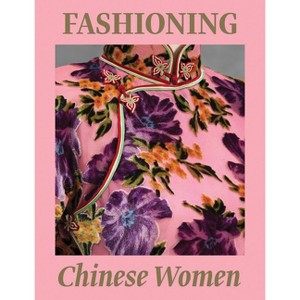
Fashioning Chinese Women: Empire to Modernity - by Michaela Hansen (Hardcover)
Pre-order
Sponsored
About this item
Highlights
- A visual chronology of modern Chinese fashion--from the fall of the Qing dynasty to the Cultural Revolution--as seen through 70 rare ensemblesPublished with Los Angeles County Museum of Art.
- Author(s): Michaela Hansen
- 144 Pages
- Art, Fashion & Accessories
Description
Book Synopsis
A visual chronology of modern Chinese fashion--from the fall of the Qing dynasty to the Cultural Revolution--as seen through 70 rare ensembles
Published with Los Angeles County Museum of Art.
This sumptuous publication showcases Chinese women's high fashion designs from the late Qing dynasty at the turn of the 20th century through the 1960s, examining how women's dress evolved amid seismic shifts in Chinese society. With more than 120 images, it traces transformations in silhouette, tailoring and textile innovation, revealing the ways Chinese fashion responded to globalization, modernization and women's changing roles. A special point of interest throughout the book is the qipao, the form-fitting, often ornately designed gown that is an iconic signifier of modern Chinese femininity. The volume charts its emergence in the 1920s and its adaptation across the diaspora from the 1940s to the 1960s.
New York-based Taiwanese Canadian fashion designer Jason Wu developed special 3D-printed mannequins (with nine different historically inspired hairstyles) to sport many of the ensembles, bringing to life fashionable women's body types across seven decades. Wu also pens the book's preface. Two essays by design historians and curators, Mei Mei Rado and Michaela Hansen, offer original research and nuanced analyses of modern Chinese fashion design. Rado investigates fashion's interplay with rapid historical and cultural changes in China, while Hansen analyzes how industrial and technological advances reshaped Chinese textile design. Interspersed throughout the volume are archival images including book illustrations, textile prints, magazine covers and calendar posters. Altogether, Fashioning Chinese Women offers an in-depth visual chronology of a dynamic chapter in Chinese fashion history that has been largely overlooked by Western art museums and publishers.
Shipping details
Return details
Frequently bought together


Discover more options