Target New ArrivalsGift Ideas for DadClothing, Shoes & AccessoriesHome & DecorKitchen & DiningOutdoor Living & GardenGroceryHousehold EssentialsBabyBeautyPersonal CareSports & OutdoorsHealthWellnessLuggageSchool & Office SuppliesToysElectronicsVideo GamesMovies, Music & BooksParty SuppliesGift IdeasGift CardsPetsUlta Beauty at TargetShop by CommunityTarget OpticalDealsClearanceNew ArrivalsGift Ideas for DadBack to SchoolCollegeTop DealsTarget Circle DealsWeekly AdShop Order PickupShop Same Day DeliveryRegistryRedCardTarget CircleFind Stores
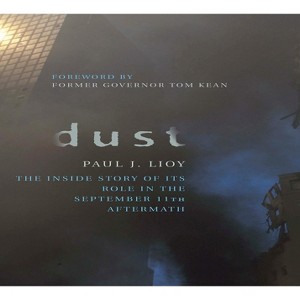
Dust - by  Paul J Lioy (Paperback) - 1 of 1

Dust - by Paul J Lioy (Paperback)

$18.99

In Stock

Free & easy returns

Free & easy returns

Return this item by mail or in store within 90 days for a full refund.
Eligible for registries and wish lists

About this item

Highlights

  • One of the first scientists to take samples from Ground Zero after the destruction of the Twin Towers, Lioy shares his personal and professional perspectives on the World Trade Center dust.
  • About the Author: Paul J. Lioy is a Professor and Vice Chair, Department of Environmental and Occupational Medicine at UMDNJ-Robert Wood Johnson Medical School.
  • 280 Pages
  • Science, Environmental Science

Description


About the Book


Despite exhaustive reports about the September 11th attacks at the World Trade Center, no one report examines the dust that poured from the skies as the buildings collapsed in as much personal and technical detail as Lioy offers here. From his own experiences examining and ana...


Book Synopsis


One of the first scientists to take samples from Ground Zero after the destruction of the Twin Towers, Lioy shares his personal and professional perspectives on the World Trade Center dust. What was in the material that rained down after the disintegration of these buildings? Why did officials wrongly choose to focus on the release of asbestos? How did the size of the dust particles influence the development of the World Trade Center Cough among rescue workers and other New Yorkers? When were respirators used on site and what changes should be made to respirator design now? Dust answers these, and many other, questions about the environmental effects, public policy initiatives, health outcomes and scientific findings that played a critical role in the aftermath of September 11th. Beyond providing insightful analysis of what happened then, this book details the significant steps we need to take in order to better prepare for future catastrophes.


Review Quotes


"In Dust, Paul Lioy captures many watershed events following the attacks on September 11, 2001 through much of this decade. He does so in a way only a first-hand participant can. This is no ordinary journey. Dr. Lioy not only describes the events in vivid prose as only a impassioned New Yorker can, but also with the rigor of a world renowned researcher and seasoned educator. Dr. Lioy applies both sides of his brain to stitch a tapestry of emotion and reason, of reverence and objectivity, and of deconstruction and lessons learned. This important book is essential reading that will evoke discussion in the classroom, the boardroom and the living room, in the college seminar and in the church basement. Dr. Lioy's brilliant and eclectic career has prepared him for a book that reaches the scientist and the non-technical reader, alike. I hope and expect his insights and recommendations will be heeded." --Daniel A. Vallero, Duke University, author of Fundamentals of Air Pollution, 4e

"Dr. Paul Lioy has made an important contribution to the literature of 9/11 with DUST for he convinces us that in addition to the horrendous loss of life in that attack on America there was also a more subtle but very definable environmental disaster inflicted upon us. All of the rescue and recovery workers at the World Trade Center knew that the air was toxic, but just how toxic it was has not been fully understood until this book, told in a language that is clear and understandable yet with the power of scientific credibility and Dr. Lioy's credentials. The people of New York, New Jersey and the workers at that tragic place will learn much about the air they were breathing while the world watched in shock. It may be too late for some who did their best that day and the succeeding days, but with DUST we now have a wake-up call about the way we prepare for future environmental disasters." --Dennis Smith, retired NYC Firefighter and author of Report from Ground Zero

"Dust is an amazing recollection of the scientific issues surrounding exposures after 9/11. Dr. Lioy's firsthand involvement with these studies and his scientific expertise qualify him to write such a book. But the personal aspects he brings to the writing provides much perspective into what our nation was facing at the time. I highly recommend reading this book." --Dana Boyd Barr, Ph.D., professor, Environmental Health and Chemistry, Emory University, and Editor-in-Chief of the Journal of Exposure Science and Environmental Epidemiology

"Striving for public education, Lioy achieves his purpose for readers interested in the health effects of 9/11." --Booklist

"Making a mass of scientific data accessible to the general reader and adding his personal insights, Lioy presents an evenhanded account of a complex subject. Recommended for readers interested in the environmental issues of 9/11 as well as academic and public libraries, especially those with collections in exposure science and emergency management." --Library Journal

"A sobering and realistic assessment of the environmental consequences of 9/11 by one of the nation's leading experts. This authoritative work will inform decisions on the management of major disasters for years to come." --Philip J. Landrigan, M.D., Mount Sinai School of Medicine

"Dust: The Inside Story of Its Role in the September 11th Aftermath provides a first-hand account of this country's response to the environmental health threat following the 11 September 2001 (9/11) attack on the World Trade Center (WTC). This important story could not have been told with as great an understanding until now. The 9 ensuing years have allowed the emotional distance necessary for a thoughtful analysis, providing both perspective and the time needed for health effects from long and short-term exposures to be revealed....Lioy describes the successes and failures of this country's environmental health science response in recognizing, evaluating, and controlling the threat to worker and community health....While focusing on the science, Lioy weaves in the political and human influences involved in allocating scarce resources amid complex stakeholder interests and participation, including community, union, academic, federal, state, and local organizations....It is apt that Lioy writes for a broad audience that might comprise scientists and nonscientists, policy makers and communities, graduate students and undergraduates....When the next environmental disaster occurs, thanks to Lioy and the many others like him who have worked tirelessly to evaluate and mitigate the WTC environmental health threat, our response will be quicker and better coordinated, grounded in a better understanding of the science, and ultimately more effective in minimizing risks to workers and communities. Lioy states that he wrote the book for his grandchildren, but the impact of his work will strike a much broader readership, both today and well into the future." --Environmental Health Perspectives

"Dust is an interesting, timely discussion of one investigator's findings concerning released particulate matter from the World Trade Center (WTC) in the aftermath of September 11th. After September 11th, it was widely known that the released particulate matter was toxic, but it was not known how toxic. Lioy (environmental and occupational medicine, Robert Wood Johnson Medical School) describes the circumstances and results of his efforts to investigate the extent of the toxicity of the particulate matter. Basic investigatory chapters include introductory material, aspects of dust collection, sample analysis, and a discussion on exposure. The book then discusses the presence of lead and other materials (e.g., chrysotile asbestos) in the WTC dust in the samples, and a discussion of unknowns. The final chapter is titled "Exposure Science in Future Catastrophes." Dust could be a very useful supplementary resource for courses intended to address homeland security or courses that are focused on exposure to airborne contaminants. Summing Up: Recommended. All levels/libraries." --Choice Reviews

"A compelling combination of personal memoir and scientific investigation, Dust explores one of the most consequential - but least understood - outcomes of the 9/11 attacks and the collapse of the Twin Towers. The challenge Paul Lioy and his colleagues faced lay in determining what was contained in a kind of dust that no one had ever seen, what risks it posed, and how it could be handled. Lioy creates a timeline of damage and dispersal that takes the reader through the fascinating process of discovery. An accessible and intriguing account of this important episode in the history of 9/11." --Clifford Chanin, director of education, National September 11 Memorial Museum

"The author shares his personal and professional perspectives on the World Trade Center dust...that played a critical role in the aftermath of Sept. 11, 2001." --Chemical & Engineering News

"Paul Lioy was one of the first scientific investigators to show up at Ground Zero and he relentlessly analyzed the dust he collected there until it surrendered its dark secrets, which he lays out in razor sharp detail in Dust. Dr. Lioy leads readers on a precise and personal journey through the haze of ignorance and emotion unleashed by the 9/11 attacks. In the process he brings great clarity to what happened to our air after the towers came down. But he is writing not just about the past. Just as he wants to leave a record of those days for his grandchildren, he is intent on laying out options for what can be done to minimize the harm of future catastrophes. Dustis an important book for these perilous times." --Anthony DePalma, author of City of Dust: Illness, Arrogance and 9/11

"Ten years later, no one knows what was in the cloud of gases released by the combustion of all that jet fuel and building material but science has revealed what was in the dust--cement, steel, gypsum from drywall, building materials, cellulose from paper, synthetic molecules from rugs, glass fibers and human hair from the long decades of the two towers' use, among other items. "The [World Trade Center] dust held everything we consider near and dear to us," wrote Lioy, who carried out the first such analysis, in his book Dust: The Inside Story of Its Role in the September 11th Aftermath." --Scientific American


About the Author


Paul J. Lioy is a Professor and Vice Chair, Department of Environmental and Occupational Medicine at UMDNJ-Robert Wood Johnson Medical School. He is Deputy Director for Government Relations and Director of Exposure Science at the Environmental and Occupational Health Sciences Institute of Rutgers University and RWJMS-UMDNJ. Dr. Lioy received the International Society of Exposure Science (ISES) Jerome Wesolowski Award for Lifetime Achievement in Exposure in 1998, the Frank Chambers Award for lifetime achievement in Air Pollution from the Air and Waste Management Association in 2003, and the Rutgers University Graduate School's Distinguished Alumnus award in Mathematics, Engineering and Physical Sciences in 2008. He received a National Conservation Award from the Daughters of the American Revolution, and their Founders Trustees, Ellen Hardin Walworth Medal for Patriotism in 2009. He has served on the Science Advisory Board, US EPA, and the National Research Council, Board of Toxicology and Environmental Studies. He is a founder and past-president of the ISES. Dr. Lioy is an associate editor of the journal Environmental Health Perspectives, and of the Journal of Exposure Science and Environmental Epidemiology. He has published over 245 scientific papers and other publications.

Honorable Thomas H. Kean, served as Governor of the State of New Jersey 1982-1990, and during his term was rated as one of the nation's most effective leaders by Newsweek magazine. In 2002 he was appointed by President Bush as Chairman, 9/11 Commission. The Commission's Report, released in July of 2004 became a national bestseller, and its recommendations resulted in the largest intelligence reform in the nation's history. He was President of Drew University, Madison, NJ from 1990 through 2005, stressing teaching, creative use of technology in the liberal arts, and international education. Currently he serves on numerous boards, and has a regular column with The Star Ledger, NJ.

Dimensions (Overall): 8.93 Inches (H) x 6.31 Inches (W) x .72 Inches (D)
Weight: 1.04 Pounds
Suggested Age: 22 Years and Up
Number of Pages: 280
Genre: Science
Sub-Genre: Environmental Science
Publisher: Rowman & Littlefield Publishers
Format: Paperback
Author: Paul J Lioy
Language: English
Street Date: July 15, 2011
TCIN: 1010774967
UPC: 9781442201491
Item Number (DPCI): 247-30-0941
Origin: Made in the USA or Imported
If the item details aren’t accurate or complete, we want to know about it.

Shipping details

Estimated ship dimensions: 0.72 inches length x 6.31 inches width x 8.93 inches height
Estimated ship weight: 1.04 pounds
We regret that this item cannot be shipped to PO Boxes.
This item cannot be shipped to the following locations: American Samoa (see also separate entry under AS), Guam (see also separate entry under GU), Northern Mariana Islands, Puerto Rico (see also separate entry under PR), United States Minor Outlying Islands, Virgin Islands, U.S., APO/FPO, Alaska, Hawaii

Return details

This item can be returned to any Target store or Target.com.
This item must be returned within 90 days of the date it was purchased in store, delivered to the guest, delivered by a Shipt shopper, or picked up by the guest.
See the return policy for complete information.

Additional product information and recommendations

Discover more options

Frequently bought together

Get top deals, latest trends, and more.

Privacy policy