Sponsored
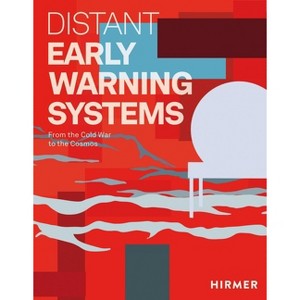
Distant Early Warning Systems - by Julie Decker (Hardcover)
In Stock
Sponsored
About this item
Highlights
- Art, climate change, and geopolitics at a time of rapid social and technological change.
- About the Author: Julie Decker is director and CEO of the Anchorage Museum in Alaska.
- 272 Pages
- Art, Art & Politics
Description
Book Synopsis
Art, climate change, and geopolitics at a time of rapid social and technological change.
The Distant Early Warning Line, also known as the DEW Line, was a system of radar stations in the northern Arctic region of Canada, with additional stations along the north coast and Aleutian Islands of Alaska and the Faroe Islands, Greenland, and Iceland. It intended to detect incoming bombers of the Soviet Union during the Cold War and provide early warning of any sea and land invasion. Today, the Arctic is seen as a place primed for data storage and vaults--doomsday structures with a utilitarian vernacular of architecture, protecting the "knowledge" of places further south rather than recognizing the local presence and expertise of place and Indigenous lifeways and Indigenous science. This book looks at the role of artists as early warning systems and explores the ways we connect and disconnect place and people through technology and the ideas of boundaries.
With the DEW Line as a framework, Julie Decker examines ideologies of warning. The DEW Line is a symbol of both the past and future. Today, we think about planetary boundaries, the boundaries of survival, and other human limits.
About the Author
Julie Decker is director and CEO of the Anchorage Museum in Alaska. She has curated numerous exhibitions and authored and edited publications on contemporary art, architecture, and the environment.
Shipping details
Return details
Frequently bought together





Guests also viewed






Discover more options