Sponsored
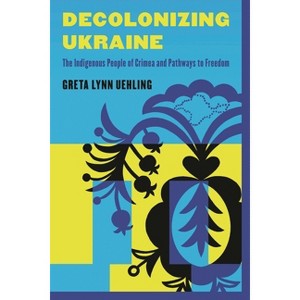
Decolonizing Ukraine - by Greta Lynn Uehling (Paperback)
In Stock
Sponsored
About this item
Highlights
- In this ground-breaking book, distinguished anthropologist Greta Lynn Uehling illuminates the untold stories of Russia's occupation of Crimea from 2014 to the present, revealing the traumas of colonization, foreign occupation, and population displacement.
- About the Author: Greta Lynn Uehling is teaching professor of international and comparative studies at the University of Michigan.
- 224 Pages
- Political Science, Colonialism & Post-Colonialism
Description
About the Book
A groundbreaking and essential read - illuminates the untold stories of Russia's occupation of Crimea from 2014 to the present
Book Synopsis
In this ground-breaking book, distinguished anthropologist Greta Lynn Uehling illuminates the untold stories of Russia's occupation of Crimea from 2014 to the present, revealing the traumas of colonization, foreign occupation, and population displacement. Drawing upon extensive fieldwork in Ukraine, including over 90 personal interviews, Uehling brings her readers into the lives of people who opposed Russia's Crimean operation, many of whom fled for government-controlled Ukraine. Via the narratives of people who traversed perilous geographies and world-altering events, Uehling traces the development of a new sense of social cohesion that encompasses diverse ethnic and religious groups. The result is a compelling story-one of resilience, transformation, and ultimately, the unwavering pursuit of freedom and autonomy for Ukraine, regardless of ethnicity or race. Ukraine is Crimea: Indigenous People, Race, and the Pathway to Decolonizing Ukraine demonstrates how understanding Crimea is essential to understanding Ukraine - and the war with Russia - today.
Review Quotes
"I cried, smiled with gratitude, and grieved alongside this book. As a Ukrainian from Crimea, reading it felt like reclaiming a lost piece of myself. The memories I had "forgotten" were gently unraveled in a delicate process of remembrance and mutual recognition. Each page offered me the missing fragments of my past and present, presented with such tenderness that they seamlessly wove back into the tapestry of my life." --Elina Beketova, Democracy Fellow at Center for European Policy Analysis
"Greta Uehling manages to cover, in one sweep, many of the most pressing issues in the interpretation of the Russo-Ukrainian War. This includes, among others, the war's start in February 2014, Russia's quick annexation of Crimea, the experience of Crimeans of the preparation and start of Russia's full-scale of Ukraine in 2022, and the broader lessons from Crimea's experience since for the onogoing decolonization of Ukraine. This book is a must-read for everybody interested in the interplay between Ukrainian domestic affairs, Crimean Tatar history, and Russian neo-imperialism since 1991." --Andreas Umland, Stockholm Center for Eastern European Studies
"Twenty years after her first book, Uehling follows up with her interlocutors. This time, Crimea - occupied - is a different place and Crimean Tatars - dispersed and oppressed - offer a new story of resilience, resistance, and forbearance. In her nuanced, sensitive, and eloquent way, Uehling shares these Indigenous voices and raises important questions of recognition, Indigenous rights, and decoloniality." --Mariia Shynkarenko, Institute for Human Studies
"Greta Uehling's captivating storytelling provides poignant insights into the experiences of the people of Crimea, both those who fled Russian occupation, and those who remain on the peninsula. Her rich, ethnographically-grounded account illuminates constructions of indigeneity, homeland, national belonging, and the challenges of decolonization and war." --Laada Bilaniuk, University of Washington, USA
"This is an ethnographically vibrant and animated depiction of the turbulent lives of Crimean Tartars. Uehling offers us a sympathetic portrait of a people wronged, vindicated, and wronged again, as well as a glimpse as to what the future holds for this strategically important indigenous people caught in the crosshairs of geopolitics and competing claims. A must read for anyone interested in the dynamics of the Russian-Ukrainian war." --Catherine Wanner, author of Everyday Religioisty and the Politics of Belonging in Ukraine
Greta Uehling manages to cover, in one sweep, many of the most pressing issues in the interpretation of the Russo-Ukrainian War. This includes, among others, the war's start in February 2014, Russia's quick annexation of Crimea, the experience of Crimeans of the preparation and start of Russia's full-scale of Ukraine in 2022, and the broader lessons from Crimea's experience since for the onogoing decolonization of Ukraine. This book is a must-read for everybody interested in the interplay between Ukrainian domestic affairs, Crimean Tatar history, and Russian neo-imperialism since 1991.
Greta Uehling's captivating storytelling provides poignant insights into the experiences of the people of Crimea, both those who fled Russian occupation, and those who remain on the peninsula. Her rich, ethnographically-grounded account illuminates constructions of indigeneity, homeland, national belonging, and the challenges of decolonization and war.
I cried, smiled with gratitude, and grieved alongside this book. As a Ukrainian from Crimea, reading it felt like reclaiming a lost piece of myself. The memories I had "forgotten" were gently unraveled in a delicate process of remembrance and mutual recognition. Each page offered me the missing fragments of my past and present, presented with such tenderness that they seamlessly wove back into the tapestry of my life.
This is an ethnographically vibrant and animated depiction of the turbulent lives of Crimean Tartars. Uehling offers us a sympathetic portrait of a people wronged, vindicated, and wronged again, as well as a glimpse as to what the future holds for this strategically important indigenous people caught in the crosshairs of geopolitics and competing claims. A must read for anyone interested in the dynamics of the Russian-Ukrainian war.
Twenty years after her first book, Uehling follows up with her interlocutors. This time, Crimea - occupied - is a different place and Crimean Tatars - dispersed and oppressed - offer a new story of resilience, resistance, and forbearance. In her nuanced, sensitive, and eloquent way, Uehling shares these Indigenous voices and raises important questions of recognition, Indigenous rights, and decoloniality.
About the Author
Greta Lynn Uehling is teaching professor of international and comparative studies at the University of Michigan. She is the author of Beyond Memory: The Deportation and Repatriation of the Crimean Tatars (2004) and Everyday War: The Conflict over Donbas, Ukraine (2023).
Shipping details
Return details
Frequently bought together

Guests also viewed
Discover more options