Sponsored
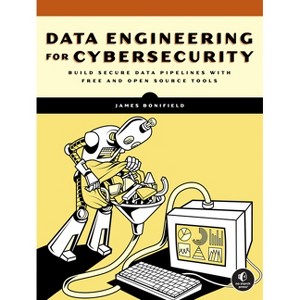
Data Engineering for Cybersecurity - by James Bonifield (Paperback)
In Stock
Sponsored
About this item
Highlights
- Turn raw logs into real intelligence.
- About the Author: James Bonifield has over a decade of experience analyzing malicious activity, implementing data pipelines, and training others in the security industry.
- 344 Pages
- Computers + Internet, Security
Description
About the Book
"This book covers the process of gathering, transforming, and storing data so cybersecurity analysts can effectively protect their organizations. Readers will learn how to use free and open source tools to collect data from workstations, servers, and appliances. They will learn the importance of standardizing the data, how to privatize or redact parts of it, how to use encryption to protect the data, and how to manage configuration versions using Git. They will also learn strategies for "enriching" data, such as adding usernames gathered from one data source to another one to make incident detection faster"--Provided by publisher.
Book Synopsis
Turn raw logs into real intelligence.
Security teams rely on telemetry--the continuous stream of logs, events, metrics, and signals that reveal what's happening across systems, endpoints, and cloud services. But that data doesn't organize itself. It has to be collected, normalized, enriched, and secured before it becomes useful. That's where data engineering comes in.
In this hands-on guide, cybersecurity engineer James Bonifield teaches you how to design and build scalable, secure data pipelines using free, open source tools such as Filebeat, Logstash, Redis, Kafka, and Elasticsearch and more. You'll learn how to collect telemetry from Windows including Sysmon and PowerShell events, Linux files and syslog, and streaming data from network and security appliances. You'll then transform it into structured formats, secure it in transit, and automate your deployments using Ansible.
You'll also learn how to:
- Encrypt and secure data in transit using TLS and SSH
- Centrally manage code and configuration files using Git
- Transform messy logs into structured events
- Enrich data with threat intelligence using Redis and Memcached
- Stream and centralize data at scale with Kafka
- Automate with Ansible for repeatable deployments
Whether you're building a pipeline on a tight budget or deploying an enterprise-scale system, this book shows you how to centralize your security data, support real-time detection, and lay the groundwork for incident response and long-term forensics.
About the Author
James Bonifield has over a decade of experience analyzing malicious activity, implementing data pipelines, and training others in the security industry. He has built enterprise-scale log solutions, automated detection workflows, and led analyst teams investigating major cyber threat actors. Bonifield holds numerous certifications and enjoys spending time with his family, traveling, and tinkering with all things security and Python related.