Sponsored
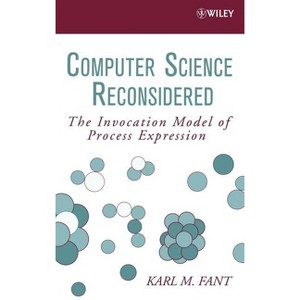
Computer Science Reconsidered - by Karl M Fant Hardcover
In Stock
Sponsored
About this item
Highlights
- The Invocation Model of Process Expression argues that mathematics does not provide the most appropriate conceptual foundations for computer science, but, rather, that these foundations are a primary source of unnecessary complexity and confusion.
- About the Author: Karl M. Fant is the founder and CEO of Theseus Research, Inc., a consulting firm specializing in the design and implementation of real-time image processing systems as well as ongoing research into the theory of computers.
- 296 Pages
- Computers + Internet, Computer Science
Description
Book Synopsis
The Invocation Model of Process Expression argues that mathematics does not provide the most appropriate conceptual foundations for computer science, but, rather, that these foundations are a primary source of unnecessary complexity and confusion. It supports that there is a more appropriate conceptual model that unifies forms of expression considered quite disparate and simplifies issues considered complex and intractable. This book presents that this model of process expression is alternative theory of computer science that is both valid and practical.
From the Back Cover
A groundbreaking, seminal work that challenges the theoretical foundations of computer science
This seminal work will challenge and change your understanding of computers and computing. Since the invention of the computer, it has been accepted with little question that the theoretical foundations of computer science are found in mathematics. The difficulties of computer science have been attributed to the inherent complexity of computation, which can only be overcome with disciplined methodology.
The author of this text presents a convincing and carefully structured argument that shows why linking computer science to mathematics results in unnecessary complexity and confusion. Instead, the author sets forth and demonstrates the viability and practicality of a new conceptual model, the invocation model of process expression. This model links the design and function of computer systems with the design and function of biological systems. Moreover, the author shows how changing your underlying assumptions sheds new light on dealing with such complex issues as concurrency, digital computers, and biological cells.
The chapters of this text are organized under three main topics:
-
The Problem: Why the underlying theory of contemporary computer science is not helpful
-
The Solution: How the invocation model of process expression solves many problems of contemporary computer science
-
The Invocation Language: How the invocation model is embodied in symbol string expression
For computer scientists and engineers, this publication opens up a completely new way of understanding what computers are, how they work, and what they can do. For students of computer science, it offers an alternative theory that helps them understand and overcome some of the limitations imposed by current theory.
Review Quotes
"I strongly recommend the book for computer systems and scientific applications in specialist teaching disciplines, as well as practical and industrial-based or research-driven enhancement and management-science sectors." (Computing Reviews, January 30, 2009)
"...Fant's work is certainly thought-provoking and should be of great interest to those concerned with theoretical computer science." (British Computer Society Book Reviews)
"Karl Fant has written a very compelling book that should be read by academicians and practitioners alike." (Ubiquity, August 28, 2007)
About the Author
Karl M. Fant is the founder and CEO of Theseus Research, Inc., a consulting firm specializing in the design and implementation of real-time image processing systems as well as ongoing research into the theory of computers. Mr. Fant developed the NULL Convention Logic, a fully expressive logic for designing and implementing clockless digital electronic circuits and systems. He is coinventor of Computer Generated Synthesized Imagery, which generates photo-realistic scenes in real time from libraries of photographic images. He holds twenty-eight patents.
Shipping details
Return details
Trending Computers & Technology Books






Discover more options