Sponsored
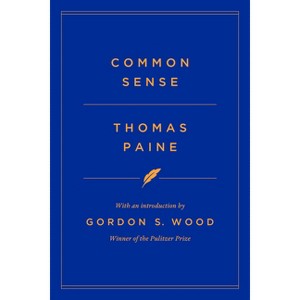
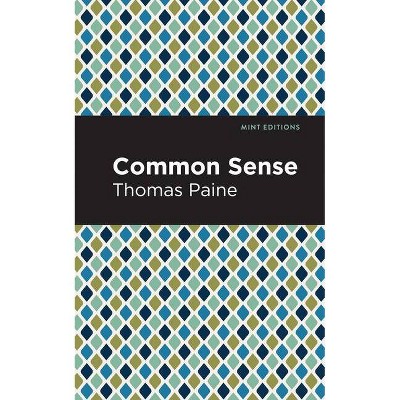
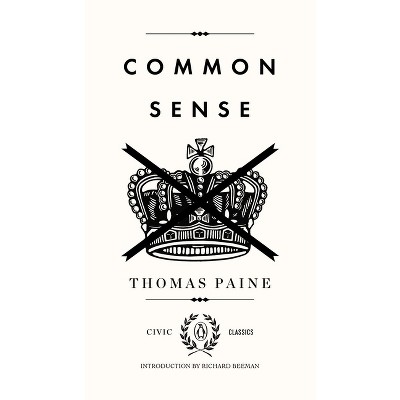
Common Sense - (Modern Library Founding Documents) by Thomas Paine (Hardcover)
Pre-order
Sponsored
About this item
Highlights
- The incendiary political pamphlet that helped launch the American Revolution, introduced by Pulitzer Prize-winning historian Gordon S. Wood The revolutionary fervor that sparked the American Revolution in 1776 had been a long time coming.
- About the Author: Thomas Paine was born in Norfolk, England, on January 29, 1737.
- 128 Pages
- Political Science, Political Ideologies
- Series Name: Modern Library Founding Documents
Description
Book Synopsis
The incendiary political pamphlet that helped launch the American Revolution, introduced by Pulitzer Prize-winning historian Gordon S. Wood
The revolutionary fervor that sparked the American Revolution in 1776 had been a long time coming. Since the early 1760s, hundreds of pamphlets had been published on both sides of the Atlantic debating the limits of Great Britain's authority over its North American colonies. Yet most of these were written by educated gentlemen for educated readers like themselves.
Common Sense by Thomas Paine, published on January 10, 1776, was entirely different. It was like a bomb thrown into the midst of a sedate debate--exploding with a force that stunned and alarmed the gentry elites. Paine sought readers everywhere, especially in the tavern- and artisan-centered worlds of the cities. Even more important than the work's accessibility was the fact that Paine wrote with a rage and a moral fury that few before him had ever expressed. He tapped into a deep anger shared by many common, middling people in these years--shopkeepers, traders, petty merchants--people weary of being scorned and held in contempt by a monarchical, aristocratic, hierarchical world.
Common Sense became the most influential pamphlet in the entire Revolutionary era, going through twenty-five editions in 1776 alone and selling 150,000 copies. Introduced here by Pulitzer Prize-winning historian Gordon S. Wood, this is the singular, electrifying work that galvanized a nation--and a people--who were ready for independence.
Review Quotes
"No writer has exceeded Paine in ease and familiarity of style; in perspicuity of expression, happiness of elucidation, and in simple unassuming language." --Thomas Jefferson
About the Author
Thomas Paine was born in Norfolk, England, on January 29, 1737. He received a basic education in history, mathematics, and science, but left school at age 13 to apprentice in his father's corsetmaking shop. In 1757, he spent time at sea aboard the privateer ship King of Prussia, and later found employment as a journeyman staymaker in London. All the while, Paine continued to study on his own, influenced by the work of two leading figures of the Enlightenment, Isaac Newton and John Locke. He began writing political pamphlets, and at the urging of Benjamin Franklin, emigrated to Philadelphia in 1774 to work as an editor for The Pennsylvania Magazine. In 1776, he published Common Sense, which called for America's political freedom from England. The pamphlet sold more than 150,000 copies in three months. Paine next published The American Crisis during the Revolutionary War, inspiring George Washington to read it to his troops at Valley Forge. By the end of the Revolution, however, Paine's influence had run its course, and he fell out of political favor. He returned to Europe, where he published his treatise Rights of Man, which led to his arrest on charges of high treason. Disillusioned with life abroad, he returned to the U.S. to find himself vilifed as an agitator and atheist. He died in obscurity in New York City in 1809.
Shipping details
Return details
Guests also viewed



Discover more options