Sponsored
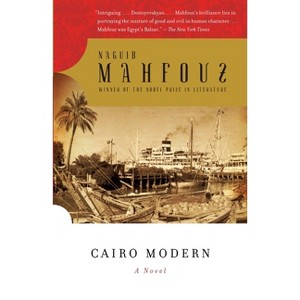
Cairo Modern - by Naguib Mahfouz (Paperback)
In Stock
Sponsored
About this item
Highlights
- In Naguib Mahfouz's suspenseful novel a bitter and ambitious nihilist, a beautiful and impoverished student, and a corrupt official engage in a doomed ménage à trois.
- About the Author: Naguib Mahfouz was born in Cairo in 1911 and began writing when he was seventeen.
- 256 Pages
- Fiction + Literature Genres, Literary
Description
About the Book
Translated into English for the first time, "Cairo Modern," one of Nobel laureate Mahfouz's most daring novels, is the tale of a doomed mnage a trois.
Book Synopsis
In Naguib Mahfouz's suspenseful novel a bitter and ambitious nihilist, a beautiful and impoverished student, and a corrupt official engage in a doomed ménage à trois.
Cairo of the 1930s is a place of vast social and economic inequities. It is also a time of change, when the universities have just opened to women and heady new philosophies imported from Europe are stirring up debates among the young. Mahgub is a fiercely proud student who is determined to keep both his poverty and his lack of principles secret from his idealistic friends. When he finds that there are no jobs for those without connections, out of desperation he agrees to participate in an elaborate deception. But what begins as a mere strategy for survival soon becomes much more for both Mahgub and his partner in crime, an equally desperate young woman named Ihsan. As they make their way through Cairo's lavish high society their precarious charade begins to unravel and the terrible price of Mahgub's Faustian bargain becomes clear.
Translated by William M. Hutchins
Review Quotes
"Intriguing.... Dostoyevskyan.... Mahfouz's brilliance lies in portraying the mixture of good and evil in human character.... Mahfouz was Egypt's Balzac." --The New York Times
About the Author
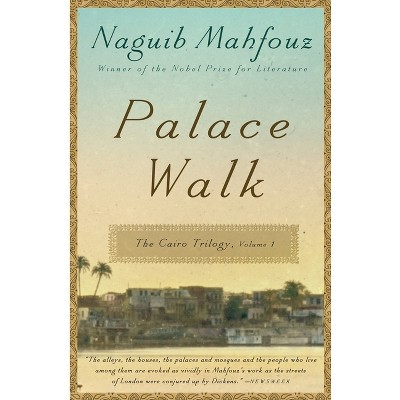
Naguib Mahfouz was born in Cairo in 1911 and began writing when he was seventeen. His nearly forty novels and hundreds of short stories range from re-imaginings of ancient myths to subtle commentaries on contemporary Egyptian politics and culture. Of his many works, most famous is The Cairo Trilogy, consisting of Palace Walk (1956), Palace of Desire (1957), and Sugar Street (1957), which focuses on a Cairo family through three generations, from 1917 until 1952. In 1988, he was the first writer in Arabic to be awarded the Nobel Prize in Literature. He died in August 2006.
Shipping details
Return details
Frequently bought together
Guests also viewed
Discover more options