Sponsored
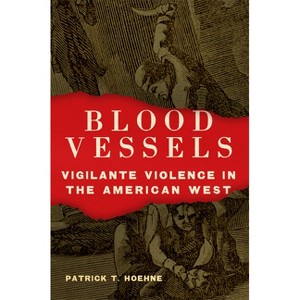
Blood Vessels - by Patrick T Hoehne Hardcover
Pre-order
Sponsored
About this item
Highlights
- The Bellevue War, the Driscoll lynchings, the mob killing of Latter-day Saints founder Joseph Smith, the violent collapse of a criminal family network in Illinois, the claim club violence of Nebraska, and the bloody vigilante campaigns in Denver, Virginia City, and Bannock: from 1840 through 1865, these episodes of extralegal violence flowed through the regions now known as Iowa, Illinois, Nebraska, Colorado, and Montana.
- Author(s): Patrick T Hoehne
- 326 Pages
- History, United States
Description
About the Book
Blood Vessels: Vigilante Violence in the American West reveals the web of human movement, exchange, and collision that bound together these seemingly unrelated incidents of extralegal violent action. Exposing the direct human connections linking these episodes, Patrick T. Hoehne reframes the prevailing understanding of both the individual incidents of violent action and the larger history of vigilante violence in the antebellum United States.
Book Synopsis
The Bellevue War, the Driscoll lynchings, the mob killing of Latter-day Saints founder Joseph Smith, the violent collapse of a criminal family network in Illinois, the claim club violence of Nebraska, and the bloody vigilante campaigns in Denver, Virginia City, and Bannock: from 1840 through 1865, these episodes of extralegal violence flowed through the regions now known as Iowa, Illinois, Nebraska, Colorado, and Montana.
Blood Vessels: Vigilante Violence in the American West reveals the web of human movement, exchange, and collision that bound together these seemingly unrelated incidents of extralegal violent action. Exposing the direct human connections linking these episodes, Patrick T. Hoehne reframes the prevailing understanding of both the individual incidents of violent action and the larger history of vigilante violence in the antebellum United States. With fresh insight into prominent moments of violence like the Montana vigilante movement and the lynching of Joseph Smith, Blood Vessels also shows how extralegal violence gave rise to western cities such as Omaha and Denver.
Hoehne's focus on the human mechanics behind vigilante violence offers a window into the efforts of nineteenth-century Americans to challenge, uphold, twist, and reimagine the law and their relationship to it. Lawmen became lynchers, and horse thieves remade themselves as sheriffs. The result, as the book shows, was a growing willingness of Americans to engage in extralegal violence, even to the extreme of killing their enemies. Blood Vessels looks past the regional exceptionalism of previous scholarship and carefully considers how violence flowed from the American Middle West into the West during this period. These rapid transformations of society represent a deeply human history, one with implications for our understanding of not only the violent incidents themselves, but the very mechanics behind vigilante violence in the nineteenth-century United States.
Review Quotes
"Few have looked hard at extralegal collective violence in the antebellum Midwest and West. And yet these were key places where patterns of American lynching violence emerged. Hoehne has mined the archives carefully, while his argument and deep social lens are innovative. Blood Vessels will make a major contribution to the field."--Michael Pfeifer, author of Lynching Beyond Dixie: American Mob Violence Outside the South
"Hoehne uncovers hitherto unknown kinship connections that transmitted a particular strain of extralegal collective violence across the prairies and plains in the two decades prior to the Civil War. These so-called 'Banditti' networks and vigilantism among settlers have rarely been centered in the history of American violence."--Jonathan Obert, author of The Six-Shooter State: Public and Private Violence in American Politics
Shipping details
Return details
Guests also viewed
Discover more options