Sponsored
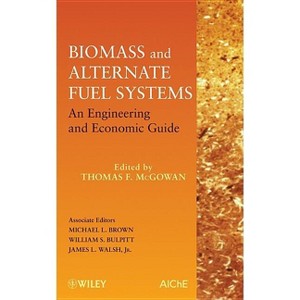
Biomass and Alternate Fuel Systems - by Thomas F McGowan Hardcover
In Stock
Sponsored
About this item
Highlights
- This book explains characteristics of renewable fuels, especially biomass and wood, and the cost-effective and environment-friendly methods of handling, storing and burning these fuels.
- About the Author: Thomas F. McGowan is President and founder of TMTS Associates Inc., a firm that specializes in thermal systems and air pollution control.
- 288 Pages
- Technology, Power Resources
Description
Book Synopsis
This book explains characteristics of renewable fuels, especially biomass and wood, and the cost-effective and environment-friendly methods of handling, storing and burning these fuels. It is complete with the economic evaluation method, introduction of the pollution control equipment for limiting the emission from fuel combustion, case studies, and costs and carbon emission comparisons between conventional and alternate fuels. Many case studies are introduced here too.
This book is an update and expansion of the Industrial Wood Energy Handbook by a team from the Georgia Institute of Technology in 1984. It introduces new technologies new technologies not available at the time of the early version.
From the Back Cover
Discover how to fully reap the benefits of biomass and alternate fuels
Biomass and alternate fuels offer cleaner, renewable ways to produce energy, can greatly reduce operating costs, and are mostly carbon neutral. Biomass and Alternate Fuel Systems: An Engineering and Economic Guide provides readers with an understanding of these environmentally friendly fuels alongside step-by-step guidance for converting these fuels into energy. In addition to biomass, the book covers such alternate fuels as wood, biogas, reclaimed oil, used tires, cooking oil, solid wastes, and coke. Case studies help readers understand how they can install and operate energy systems to reap all the benefits of biomass and alternate fuels.
Everything readers need to know to take full advantage of biomass and alternate fuels is covered, including:
- Choosing and installing the right equipment to convert fuels into energy
- Evaluating the impact on capital, operating, and production costs
- Limiting emissions with pollution control equipment
- Using heat exchangers effectively
- Comparing the costs and carbon emissions of conventional and alternate fuels
- Complying with EPA and OSHA regulations
The need for renewable, alternate energy systems has never been greater. With Biomass and Alternate Fuel Systems, readers have a "how-to" manual that enables them to choose the right fuel and install the right energy system to meet their organization's particular needs.
Review Quotes
"Covering everything from the theory (such as energy content and physical properties of different fuels) to the practical (e.g. boiler, hopper and filter design), ... this is a very useful guide." (Enagri, November 2009)
About the Author
Thomas F. McGowan is President and founder of TMTS Associates Inc., a firm that specializes in thermal systems and air pollution control. He has thirty-five years of experience in combustion, air pollution control, solids handling, and industrial ventilation.
Michael L. Brown is a Senior Engineer at the Georgia Institute of Technology's Enterprise Innovation Institute in the Energy and Sustainability Services Division. His work includes energy efficiency and conservation, energy management projects, and alternate energy projects including studies on production of densified wood pellets.
William S. Bulpitt is a Senior Research Engineer for the Georgia Institute of Technology's Strategic Energy Institute. His current work includes research in renewable and transitional energy with utilities and industry.
James L. Walsh, Jr. is a Senior Engineer at the Georgia Institute of Technology. With more than forty years of professional experience in design engineering, applied research, technical assistance, and training, he specializes in energy conversion, waste conversion, environmental compliance assistance, and the design, operation, and analysis of pollution control systems.
Shipping details
Return details
Trending Computers & Technology Books



Discover more options