Sponsored
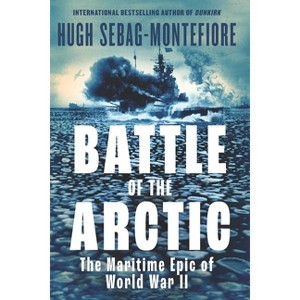
Battle of the Arctic - by Hugh Sebag-Montefiore Hardcover
In Stock
Sponsored
About this item
Highlights
- From the bestselling author of Dunkirk: Fight to the Last Man and Enigma: The Battle for the Code, the story of unsung American heroism in World War II's maritime epic in the Arctic.
- About the Author: Hugh Sebag-Montefiore was a barrister before becoming a journalist and historian.
- 816 Pages
- History, Military
Description
Book Synopsis
From the bestselling author of Dunkirk: Fight to the Last Man and Enigma: The Battle for the Code, the story of unsung American heroism in World War II's maritime epic in the Arctic.
No campaign during World War II contained more spinetingling drama, outstanding courage, and heartbreaking tragedy than the Arctic convoys. Yet they--and the multifaceted battle of the Arctic that had to be fought to get them through to Russia--remain one of the war's most under-celebrated feats.
As this book's title implies, Battle of the Arctic tells a unique story. For much of the conflict was complicated by terrific storms, snow, ice, fog, whales and Arctic mirages, so that what is chronicled at times sounds like a cross between the nightmarish torment experienced by both Shackleton in his ship Endurance and Scott of the Antarctic, and an Arctic version of Robinson Crusoe.
The action unfolded as Allied naval and merchant seamen, airmen, submariners, soldiers and intelligence officers delivered on their countries' promise to take arms to Russia notwithstanding the German attempts to hunt them in their aircraft, U-boats and surface fleet spearheaded by Tirpitz and Scharnhorst. When ships were attacked and went down in seas so cold that a man could die after just five minutes of immersion, it triggered events reminiscent of the do-or-die moments during the sinking of the Titanic. Men perished one by one in lifeboats and as castaways on deserted Arctic islands where they were stalked by polar bears. Frostbitten and wounded survivors ended up in Russian hospitals so primitive that amputations were carried out without anaesthetics. Other survivors, while stranded for months in the communist state they were aiding, experienced the murky worlds of the NKVD and the gulag as well as famine and prostitution.
Using new material unearthed in American, British, Russian and German archives, as well as Polish, Norwegian, French and Dutch sources, and a remarkable collection of vivid witness accounts brought together at the passing of the last survivors, Hugh Sebag-Montefiore can at last shine a revealing light on this extraordinary tale that oscillates between the sailors' eye view on the front line, and the controversies that infuriated world leaders.
Review Quotes
"Excellent. While the horrors of war at sea are well-known, the Allies' ill-fated supply convoys from Iceland to Russia are an often-overlooked theater of the war. Sebag-Montefiore uses wartime diaries, interviews and newly available archives from Russia to focus on 'the officers, armed guards and the ordinary civilian seamen.'"--The Wall Street Journal
"A rousing history of Allied supply convoys to the Soviet Union. Historian Sebag-Montefiore recaps the exploits of British, American, and Russian freighters ferrying wartime supplies from Scotland and Iceland to Russia's arctic ports of Murmansk and Archangel. Sebag-Montefiore covers the theater's major engagements at every level. It's a rich and detailed chronicle of a crucial but seldom-sung naval struggle."--Publishers Weekly
"Sebag-Montefiore takes a distinct approach by emphasizing the stories of survivors of sinkings on both sides. Granular details of personal experiences within a strategic context distinguish this naval history." --Booklist
"Journalist and historian Sebag-Montefiore is a tireless researcher who has turned up letters, diaries, and personal accounts. The author takes advantage of interviews and fresh documentation to emphasize the experiences of individual sailors. A gripping chronicle of warfare in extreme conditions."--Kirkus Reviews
'Several fine books have been written about...the miracle of Dunkirk, but none better than this.'
-- "Andrew Roberts, Mail on Sunday"
"Few readers could fail to be gripped by Dunkirk's combination of enthralling narrative and firsthand testimony. Indeed, the greatest strength of this book - greater even than its excellent maps and detail-rich notes - is the extent to which the author allows the diaries, letters, and memoirs of contemporaries to speak for themselves."-- "Niall Ferguson, New York Review of Books"
"First-rate panoramic history, and highly affecting worm's-eye account, of Britain's absolutely all-time favorite disaster. The particular brilliance of this book lies in the manner in which Sebag-Montefiore interleaves the military with the political."
-- "Christopher Hitchens, New York Times"
"Sebag-Montefiore's book is a narrative triumph. I have not read a better account."
-- "Max Hastings, The Sunday Telegraph"
"The greatest achievement of Dunkirk: Fight to the Last Man is the masterly way he brings a wealth of fresh revelation and detail to this most familiar tale. It is both meticulous military history and a deeply moving testimony to the extraordinary personal bravery of individual soldiers."-- "Tim Gardam, The Times"
About the Author
Hugh Sebag-Montefiore was a barrister before becoming a journalist and historian. He has written for the Sunday Times, Sunday Telegraph, Observer, Independent on Sunday, and Mail on Sunday. He is the author of three bestselling history books, two about the Second World War (Enigma: The Battle for the Code and Dunkirk: Fight to the Last Man), and one about the First World War (Somme: Into the Breach). He also wrote Kings On The Catwalk: The Louis Vuitton Moët-Hennessy Affair.
Shipping details
Return details
Frequently bought together




Guests also viewed



Discover more options