Sponsored
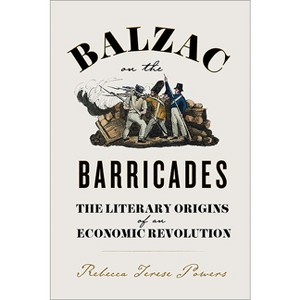
Balzac on the Barricades - by Rebecca T Powers
In Stock
Sponsored
About this item
Highlights
- The role of nineteenth-century French literature in a distinctively modern political movement When Parisian workers took to the streets in February 1848, they adopted the rallying cry of droit au travail (the right to work).
- About the Author: Rebecca Terese Powers teaches English at the Collège Sévigné in Paris.
- 246 Pages
- Literary Criticism, Semiotics & Theory
Description
About the Book
"This book shows that the redefinition of labor as a basic right during the French Revolution sprang not only from political debates but also directly from contemporary literature"--
Book Synopsis
The role of nineteenth-century French literature in a distinctively modern political movement
When Parisian workers took to the streets in February 1848, they adopted the rallying cry of droit au travail (the right to work). That protesters increasingly framed employment as a political right represented a radical and modern development. But where had this idea originated? In her examination of this cause célèbre of France's Second Republic, Rebecca Powers shows that the redefinition of labor as a basic right sprang not only from political debates but also directly from contemporary literature.
Powers charts the rise of this revolutionary concept through the tales of bourgeois dominance in the novels and newspaper articles of Honoré de Balzac. As Powers explains, this realist semiotician of French provincial and urban life par excellence was the first to attempt a definition of modern labor as an integral part of the emerging modern society. Powers makes clear how recognizing Balzac's influence on mid-nineteenth-century political discourse is essential to understanding the course of events in that earth-shaking year.
Review Quotes
Balzac on the Barricades charts the rise of concepts related to productivity and work as they were articulated in mid-nineteenth-century France and the author's elegant writing makes the book a joy to read. Powers also sews together disparate threads of intellectual history and literature in a compelling way that shares the optimistic view of intellectual work that came out of the Revolution of 1848 and the economic revolution occurring at the same time.
--H-FranceAbout the Author
Rebecca Terese Powers teaches English at the Collège Sévigné in Paris. She holds a PhD in French literature from Johns Hopkins University and has taught French and comparative literature at Warwick University in the UK, the University of California Santa Barbara in the United States, and at the Institut d'études politiques (SciencesPo) in France.
Shipping details
Return details
Frequently bought together



Trending Paperback Books





Discover more options