Sponsored
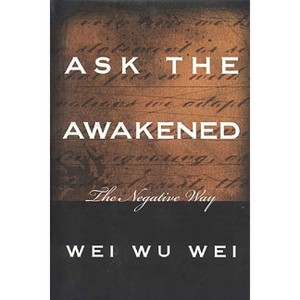
Ask the Awakened - by Weiwu Wei & Wei Wu Wei Paperback
In Stock
Sponsored
About this item
Highlights
- The author shares his deep understanding of Taosim--specifically the texts attribued the Heart, Diamond and Lankavatara sutras; and attributed to Cahn Buddhism as taught by Hui Neng, Huang Po, Hui Hai, rct.
- About the Author: "Wei Wu Wei" wurde 1895 in eine angesehene irische Familie geboren, wuchs auf einem Landsitz bei Cambridge, England, auf und erhielt eine umfassende Ausbildung, unter anderem an der Universität Oxford.
- 224 Pages
- Body + Mind + Spirit, General
Description
About the Book
The author shares his deep understanding of Taosim-specifically the texts attribued the Heart, Diamond and Lankavatara sutras; and attributed to Cahn Buddhism as taught by Hui Neng, Huang Po, Hui Hai, rct.
Book Synopsis
The author shares his deep understanding of Taosim--specifically the texts attribued the Heart, Diamond and Lankavatara sutras; and attributed to Cahn Buddhism as taught by Hui Neng, Huang Po, Hui Hai, rct.
Review Quotes
First written in the mid-twentieth century by the anonymous Buddhist scholar Wei Wu Wei, Ask The Awakened: The Negative Way is a unique spiritual reinterpretation of ancient texts, incorporating Zen Buddhism, Taoism, and the teachings of Ramana Maharshi among other sources into a unique, powerful testimony that forces careful self-examination on the reader's part. Enthusiastically recommended reading for students of Buddhism, Taoism, and Eastern Spirituality, Ask The Awakened is a profound and deeply moving work of true insight such as 'We do not possess an 'ego.' We are possessed by the idea of one.'
I feel the best contribution I could make on the occasion of this very welcome reprint of Ask the Awakened is to help new Wei Wu Wei readers with some tips that, from my experience, may be helpful on how to approach this book and find the wonderful treasure that awaits them. Somewhat like a mythological elfin city, it may at first look rather unlikely from the outside, but once you have entered you realize you are in a wondrous place. Wei Wu Wei was, along with Douglas Harding, Robert Linssen, Paul Reps and a few others, a trailblazer when it comes to creating a wholly Western approach to this ancient insight unencumbered with unnecessary cultural artifices.--Galen Sharp
About the Author
"Wei Wu Wei" wurde 1895 in eine angesehene irische Familie geboren, wuchs auf einem Landsitz bei Cambridge, England, auf und erhielt eine umfassende Ausbildung, unter anderem an der Universität Oxford. Schon früh entwickelte er ein Interesse an Ägyptologie, das 1923 zu der Veröffentlichung zweier Bücher über die Geschichte und Kultur des alten Ägyptens führte.
Es folgte eine Phase intensiver künstlerischer Tätigkeit in Großbritannien während der 1920er- und 1930er-Jahre: als Theoretiker, Theaterproduzent, Schöpfer radikaler "Tanzdramen", Herausgeber mehrerer einschlägiger Zeitschriften sowie Autor zweier Bücher zu diesen Themen. Er beeinflusste zahlreiche namhafte Dramatiker, Dichter und Tänzer seiner Zeit - darunter auch seine Cousine Ninette de Valois, Gründerin des Royal Ballet, das ursprünglich aus seiner eigenen Tanztruppe am Cambridge Festival Theatre hervorging, das er von 1926 bis 1933 gepachtet hatte.
Nachdem er dieses Tätigkeitsfeld ausgeschöpft hatte, wandte er sich der Philosophie und Metaphysik zu. Dies führte zu einer längeren Reisezeit durch Asien, unter anderem mit Aufenthalten im Ashram von Sri Ramana Maharshi in Tiruvannamalai, Indien. 1958, im Alter von 63 Jahren, erschien das erste Buch unter dem Namen Wei Wu Wei. In den folgenden 16 Jahren veröffentlichte er sieben weitere Werke, darunter sein letztes Buch im Jahr 1974 unter dem zusätzlichen Pseudonym O.O.O.
Den Großteil dieser späten Schaffensperiode verbrachte er mit seiner Ehefrau in Monaco. Es wird angenommen, dass er unter anderem Lama Anagarika Govinda, Dr. Hubert Benoit, John Blofeld, Douglas Harding, Robert Linssen, Arthur Osborne, Robert Powell und Dr. D. T. Suzuki persönlich kannte. Er verstarb 1986 im Alter von 90 Jahren.
Shipping details
Return details
Trending Diet, Health & Fitness Books



Discover more options