Sponsored
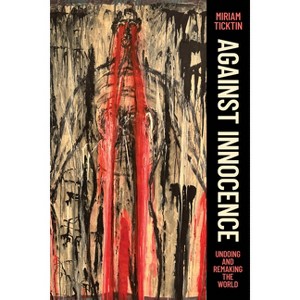
Against Innocence - by Miriam Ticktin
Out of Stock
Sponsored
About this item
Highlights
- A provocative critique of how the concept of innocence functions in contemporary politics and society.
- About the Author: Miriam Ticktin is professor of anthropology at the CUNY Graduate Center and director of the Center for Place, Culture, and Politics.
- 272 Pages
- Social Science, Anthropology
Description
About the Book
"A provocative critique of how the concept of innocence functions in contemporary politics and society. In 2025, we are arguably more attentive to different kinds of harm than ever before in human history. Recognizing injustices of all kinds, especially historically overlooked ones, is an undeniable achievement. But as Miriam Ticktin reminds us in this timely and bold book, designating certain groups as "innocent," or otherwise in need, often comes with its own problems. In Against Innocence, Ticktin shows how innocence structures political relationships, designating some as victims and others as "saviors" who, conveniently, claim innocence themselves, absolving themselves of responsibility and foreclose the achievement of a more genuine, lasting form of justice. Ultimately, Ticktin wants to understand how the discourse around innocence functions, what gives it such power, and why we are so compelled by it. She examines this process across various domains, including migration, reproductive rights, racial justice, medicine, environmentalism, and more. Throughout the book, she shows how the concept of innocence intimately shapes why and how we should care, for whom, and whose lives matter--and how this can have devastating consequences, when only an exceptional few can qualify as innocent. A politics grounded on innocence justifies a world built on inequality, designating most people-especially the racialized poor--as unworthy, undeserving, and less than human. As an alternative, she explores the aesthetics and politics of "commoning"-a collective regime of living that refuses a liberal politics of individual identity and victimhood"--
Book Synopsis
A provocative critique of how the concept of innocence functions in contemporary politics and society.
In this timely and bold book, Miriam Ticktin explores how a concept that consistently appears as a moral good actually ends up creating harm for so many. Claims to innocence protect migrant children, but often at the expense of their parents; claims to the innocence of the fetus work to punish women. Ticktin shows how innocence structures political relationships, focusing on individual victims and saviors, while foreclosing forms of collective responsibility. Ultimately, she wants to understand how the discourse around innocence functions, what gives it such power, and why we are so compelled by it, while showing that alternative political forms already exist. She examines this process across various domains, from migration, science, and environmentalism to racial and reproductive justice.
Throughout the book, Ticktin shows how the concept of innocence intimately shapes why, how, and for whom we should care and whose lives matter--and how this can have devastating consequences when only an exceptional few can qualify as innocent. A politics grounded on innocence justifies a world built on inequality, designating most people--especially the racialized poor--as unworthy, undeserving, and less than human. As an alternative, she explores the aesthetics and politics of "commoning"--a collective regime of living that refuses a liberal politics of individual identity and victimhood.
Review Quotes
"Building on Ticktin's earlier work on the new humanitarianism, Against Innocence takes that initial, important intervention in broader, groundbreaking directions."-- "Nadia Abu El-Haj, Barnard College and Columbia University"
"From the debates on immigration to the justification of mass violence, our moral world is divided between innocent and guilty, legitimizing either protection or oppression. Ticktin's important and profound book unveils the political and ethical stakes of this problematic distinction."-- "Didier Fassin, Collège de France"
"Ticktin's lucid book is a challenge and a promise. She shows how difficult it is to free political and moral imagination from the peculiar category of innocence. But such effort can resolve into the opportunity--and obligation--to refresh conviviality, in persistent opposition to partition, efficiency, and despair."-- "Ruth Wilson Gilmore, author of Abolition Geography"
About the Author
Miriam Ticktin is professor of anthropology at the CUNY Graduate Center and director of the Center for Place, Culture, and Politics. She is the author of Casualties of Care and the coeditor of In the Name of Humanity.
Shipping details
Return details
Frequently bought together

Guests also viewed




Discover more options