Sponsored
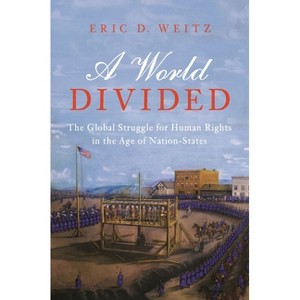
A World Divided - (Human Rights and Crimes Against Humanity) by Eric D Weitz
In Stock
Sponsored
About this item
Highlights
- A global history of human rights in a world of nation-states that grant rights to some while denying them to others Once dominated by vast empires, the world is now divided into close to 200 independent countries with laws and constitutions proclaiming human rights--a transformation that suggests that nations and human rights inevitably developed together.
- About the Author: Eric D. Weitz (1953-2021) was Distinguished Professor of History at City College and the Graduate Center, City University of New York.
- 576 Pages
- History, World
- Series Name: Human Rights and Crimes Against Humanity
Description
About the Book
Through vivid histories drawn from virtually every continent, Weitz describes how, since the 18th century, nationalists have struggled to establish their own states that grant human rights to some people. At the same time, they have excluded others through forced assimilation, ethnic cleansing, or even genocide.
Book Synopsis
A global history of human rights in a world of nation-states that grant rights to some while denying them to others
Once dominated by vast empires, the world is now divided into close to 200 independent countries with laws and constitutions proclaiming human rights--a transformation that suggests that nations and human rights inevitably developed together. But the reality is far more problematic, as Eric Weitz shows in this compelling global history of the fate of human rights in a world of nation-states.
Through vivid histories drawn from virtually every continent, A World Divided describes how, since the eighteenth century, nationalists have struggled to establish their own states that grant human rights to some people. At the same time, they have excluded others through forced assimilation, ethnic cleansing, or even genocide. From Greek rebels, American settlers, and Brazilian abolitionists in the nineteenth century to anticolonial Africans and Zionists in the twentieth, nationalists have confronted a crucial question: Who has the "right to have rights?" A World Divided tells these stories in colorful accounts focusing on people who were at the center of events. And it shows that rights are dynamic. Proclaimed originally for propertied white men, rights were quickly demanded by others, including women, American Indians, and black slaves.
A World Divided also explains the origins of many of today's crises, from the existence of more than 65 million refugees and migrants worldwide to the growth of right-wing nationalism. The book argues that only the continual advance of international human rights will move us beyond the quandary of a world divided between those who have rights and those who don't.
Review Quotes
"[A] wide-ranging and important book is about the global struggle for human rights."---David Lorimer, Paradigm Explorer
"An impressive tale with a wide-ranging reflection on the entanglement of two forces that have profoundly shaped the history of the past two hundred and fifty years: the nation-state and human rights."---Jan Eckel, H-Diplo
"Engaging mounting scholarship on the history of human rights, A World Divided approaches the topic by focusing on nation-states as central to understanding human rights. . . . [Weitz's] book provides a useful entryway to understanding human rights struggles for undergraduates and the general public."-- "Choice"
"Finalist for the PROSE Award in World History, Association of American Publishers"
About the Author
Eric D. Weitz (1953-2021) was Distinguished Professor of History at City College and the Graduate Center, City University of New York. He was also the author of Weimar Germany: Promise and Tragedy, which was named a New York Times Book Review Editor's Choice; A Century of Genocide: Utopias of Race and Nation; and Creating German Communism, 1890-1990: From Popular Protests to Socialist State (all Princeton).
Shipping details
Return details
Frequently bought together



Guests also viewed

Discover more options