Sponsored
In Stock
Sponsored
About this item
Highlights
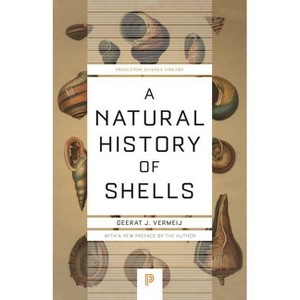
- From "one of the master naturalists of our time" (American Scientist), a fascinating exploration of what seashells reveal about biology, evolution, and the history of life Geerat Vermeij wrote this celebration of shells to share his enthusiasm for these supremely elegant creations and what they can teach us about nature.
- About the Author: Geerat J. Vermeij is Distinguished Professor of Earth and Planetary Sciences at the University of California, Davis.
- 236 Pages
- Science, Life Sciences
- Series Name: Princeton Science Library
Description
About the Book
Geerat Vermeij wrote this celebration of shells to share his enthusiasm for these supremely elegant creations and what they can teach us about nature. Most popular books on shells emphasize the identification of species, but Vermeij uses shells as a way to explore major ideas in biology. How are shells built? How do they work? And how did they evolve? With lucidity and charm, the MacArthur-winning evolutionary biologist reveals how shells give us insights into the lives of animals today and in the distant geological past. And, in a new preface, Vermeij tells us how a childhood love of collecting seashells in his native Holland sparked a lifelong passion for natural history and science.
Book Synopsis
From "one of the master naturalists of our time" (American Scientist), a fascinating exploration of what seashells reveal about biology, evolution, and the history of life
Geerat Vermeij wrote this celebration of shells to share his enthusiasm for these supremely elegant creations and what they can teach us about nature. Most popular books on shells emphasize the identification of species, but Vermeij uses shells as a way to explore major ideas in biology. How are shells built? How do they work? And how did they evolve? With lucidity and charm, the MacArthur-winning evolutionary biologist reveals how shells give us insights into the lives of animals today and in the distant geological past.
Review Quotes
"Vermeij writes with flair and clarity, providing deep insights into the animal life both of the present-day and stretching back through to ancient geological eras."---Emma Becque, World of Interiors
"A fascinating biological view of shells as the products of living organisms. . . . We come to appreciate and understand the diverse wonders of economy, function and construction that can be seen in shells."---Douglas Palmer, New Scientist
"I was swept away by the world of molluscs and found myself fascinated and informed. . . . By the end of the book I was convinced that anyone with a passion for their subject would enjoy and be educated by Vermeij's obvious passion for his."-- "Biologist"
"This is a pleasingly different book. Most other popular books on shells help one to identify them. In this book Vermeij uses shells to help understand the ecology, evolution, and history of snails, clams, and other Mollusca, the phylum of animals that construct 'shells.' . . . This book uses both contemporary and fossil shells to explore many ideas and processes in general biology. . . . I have been seeking this book for years."-- "Quarterly Review of Biology"
"Vermeij provides an elegantly written and beautifully illustrated account of shell construction, function and evolution, while showing how these molluscan houses give us insights into ecology and the history of life. A book that will be treasured by scientists and lay readers alike."-- "Nature"
About the Author
Geerat J. Vermeij is Distinguished Professor of Earth and Planetary Sciences at the University of California, Davis. He is the author of The Evolutionary World: How Adaptation Explains Everything from Seashells to Civilization; Privileged Hands: A Scientific Life; Nature: An Economic History (Princeton); and Evolution and Escalation: An Ecological History of Life (Princeton).
Shipping details
Return details
Frequently bought together




Guests also viewed
Discover more options