Sponsored
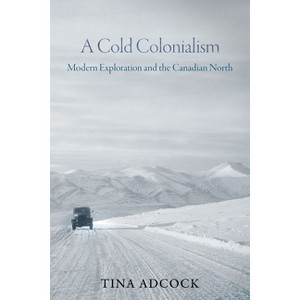
About this item
Highlights
- Sheds light on the impact of twentieth-century northern expansion in Canada.
- About the Author: Tina Adcock is assistant professor of history at Simon Fraser University.
- 402 Pages
- History, Canada
Description
About the Book
"Exploration has long been pivotal to southern engagements with northern Canada, but it is most often associated with the nineteenth century or earlier. A Cold Colonialism offers the first extended examination of twentieth-century exploration in the Canadian North. Modern exploration helped southerners establish and maintain distinctive kinds of colonial and settler colonial power over northern Indigenous homelands. Who explored the North between 1918 and 1965? What forms did exploration take? What did it mean to explorers and others affected by it? Tina Adcock focuses on four representative explorers with richly documented careers: mining engineer George Douglas, surveyor Guy Blanchet, ethnologist Vilhjalmur Stefansson, and filmmaker Richard Finnie. Each used exploration to grapple with key, often discomfiting aspects of modernity, including industrialization, urbanization, and the specialization of knowledge. Despite limited experience in and knowledge of the Canadian North, these explorers helped southern militaries, industries, and governments exert control over northern peoples and lands. Each also claimed belonging in and authority over the North, speaking over people who had long resided there and better understood the region. The ways that explorers felt about, thought about, and moved through the North still resonate among southern settlers in Canada today"--
Book Synopsis
Sheds light on the impact of twentieth-century northern expansion in Canada.
Exploration has long been pivotal to southern engagements with northern Canada, but it is most often associated with the nineteenth century or earlier. A Cold Colonialism offers the first extended examination of twentieth-century exploration in the Canadian North. Modern exploration helped Southerners establish and maintain distinctive kinds of colonial and settler colonial power over northern Indigenous homelands.
Who explored the North between 1918 and 1965? What forms did exploration take? What did it mean to explorers and others affected by it? Tina Adcock focuses on four representative explorers with richly documented careers: mining engineer George Douglas, surveyor Guy Blanchet, ethnologist Vilhjalmur Stefansson, and filmmaker Richard Finnie.
Despite limited experience in and knowledge of the Canadian North, these explorers helped southern militaries, industries, and governments exert control over northern peoples and their lands. Each also claimed belonging in and authority over the North in ways that still resonate among southern settlers in Canada today.
Review Quotes
"Adcock's exemplary work is the most comprehensive and insightful examination of twentieth-century exploration and its role in the industrial colonization of the North to date."-- "Liza Piper, author of When Disease Came to This Country: Epidemics and Colonialism in Northern North America"
"Rich in archival material, wide-ranging in its use of sources, and deep in its analysis of historical people and events, A Cold Colonialism is an exceptional work of scholarship."-- "Michael F. Robinson, author of The Lost White Tribe: Explorers, Scientists, and the Theory That Changed a Continent"
About the Author
Tina Adcock is assistant professor of history at Simon Fraser University. She is the coeditor of Made Modern: Science and Technology in Canadian History.
Shipping details
Return details
Guests also viewed

Discover more options