Target New ArrivalsGift Ideas for DadClothing, Shoes & AccessoriesHome & DecorKitchen & DiningOutdoor Living & GardenGroceryHousehold EssentialsBabyBeautyPersonal CareSports & OutdoorsHealthWellnessLuggageSchool & Office SuppliesToysElectronicsVideo GamesMovies, Music & BooksParty SuppliesGift IdeasGift CardsPetsUlta Beauty at TargetShop by CommunityTarget OpticalDealsClearanceNew ArrivalsGift Ideas for DadBack to SchoolCollegeTop DealsTarget Circle DealsWeekly AdShop Order PickupShop Same Day DeliveryRegistryRedCardTarget CircleFind Stores
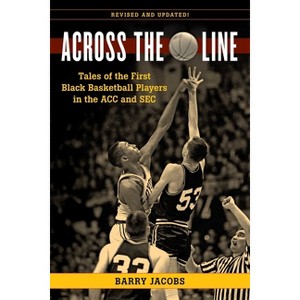
Across the Line - by  Barry Jacobs (Paperback) - 1 of 1

Across the Line - by Barry Jacobs (Paperback)

$24.95

In Stock

Free & easy returns

Free & easy returns

Return this item by mail or in store within 90 days for a full refund.
Eligible for registries and wish lists

About this item

Highlights

  • In the 1960s, college sports required more than athletic prowess from its African American players.
  • About the Author: Barry Jacobs has covered college basketball as well as news and other sports since 1976 for numerous publications, among them the New York Times, Washington Post, GQ, People, Oceans, the Saturday Evening Post and the Sporting News.
  • 454 Pages
  • Sports + Recreation, Basketball

Description


About the Book


Now thoroughly revised and updated, Across the Line recounts the experiences of the pioneering African-American basketball players at 18 colleges in the Atlantic Coast and Southeastern conferences, the South's most prominent, historically white intercollegiate leagues.


Book Synopsis


In the 1960s, college sports required more than athletic prowess from its African American players. For many pioneering basketball players on 18 teams in the Atlantic and Southeastern conference, playing ball meant braving sometimes menacing crowds during the tumultuous era of civil rights. Perry Wallace feared he would be shot when he first stepped onto a court in his Vanderbilt uniform. During one road game, Georgia's Ronnie Hogue fended off a hostile crowd with a chair. Craig Mobley had to flee the Clemson campus, along with other black students. C.B. Claiborne couldn't attend the Duke team banquet when it was held at an all-white country club. Wendell Hudson's mother cried with heartache when her son decided to play at the University of Alabama, and Al Heartley locked himself in a campus dorm at North Carolina State for safety the night Martin Luther King, Jr., was assassinated. Grounded in the civil rights struggles on campuses throughout the south, the voices of players, coaches, opponents and fans reveal the long-neglected story of race, sports and social history.

Barry Jacobs has covered college basketball as well as news and other sports since 1976 for numerous publications, among them the New York Times, Washington Post, GQ, People, Oceans, the Saturday Evening Post and the Sporting News. He is the author of four books, including Coach K's Little Blue Book, The World According to Dean, and Three Paths to Glory. For 14 years he wrote the Fan's Guide to ACC Basketball. He also served as an elected county commissioner for 20 years and supervises Moorefields, an historic site near Hillsborough, NC.


From the Back Cover


Perry Wallace feared he would be shot when he stepped onto a basketball court in a Vanderbilt uniform. Georgia's Ronnie Hogue jumped atop a press table, swinging a chair in self-defense, as a menacing crowd approached following a road game. Craig Noble joined other threatened black students in a rare, en masse flight from the Clemson campus. Maryland's Pete Johnson seethed when a teammate used a racial epithet in a supervised workout and his coaches let it pass. C. B. Claiborne could not attend the Duke team banquet his freshman year because it was held at a white country club.Collis Temple, whose father carried a pistol for protection against marauding whites in rural Louisiana, scuffled with an opposing player each season he played at LSU. Wendell Hudson's mother cried when the Birmingham native, whose family routinely hit the deck each time racists' bombs exploded in their neighborhood, decided to become the first black athlete at the University of Alabama. Al Heartley and other black students locked themselves in a campus dorm at North Carolina State, fearing the actions of an unruly white crowd the night Martin Luther King was assassinated.Across the Line recounts the experiences of the pioneering African-American basketball players at eighteen schools in the Atlantic Coast and Southeastern Conferences, the South's most prominent, historically white intercollegiate leagues. Set within the context of the tumultuous 1960s and early 1970s, grounded in the civil rights struggles on campus and within the larger community, and enriched by the viewpoint of players, relatives, coaches, teammates, opponents, and other observers, this book tells an important and long-neglected story combining race, sports, and social history.


Review Quotes


"Across the Line has become one of my treasured historic documents. This book delivers a thorough answer to the question 'What is it like to be the first ONE?' Being 'first' assures your place in history!"


"As someone who has been involved with the issue of race and sport for more than 50 years, I know too well that there is a huge void in our knowledge of the history of integrating our college basketball teams. Barry Jacobs' Across the Line brings us the rich history of the African-American basketball players who courageously broke the color barriers of the ACC and SEC schools. It is a must read for anyone who wants to know that history."


"For the last three decades, Barry Jacobs has been among the most respected and dedicated sportswriters covering the world of college basketball. Across theLine is his finest work. This book tells the important stories of the brave young men who were only looking to play a game, but ended up making history. Exhaustively researched and eloquently written, Across the Line is a must-read for sports and non-sports fans alike."


"I've long said basketball is like the advertising arm for race relations. In Across the Line, Barry Jacobs does an excellent job telling the unsung stories of the Black pioneers who quietly faced and surmounted barriers to athletic participation at major Southern universities a half-century ago. The sacrifices and realizations made by players, teammates and coaches paved the way for the game we enjoy today."


"The author's exhaustive interviews and impeccable research present a gut-wrenchingly clear picture of the obstacles the athletes encountered..This should be required reading for sports fans of all backgrounds."


About the Author


Barry Jacobs has covered college basketball as well as news and other sports since 1976 for numerous publications, among them the New York Times, Washington Post, GQ, People, Oceans, the Saturday Evening Post and the Sporting News. He is the author of four books, including Coach K's Little Blue Book, The World According to Dean, and Three Paths to Glory. For 14 years he wrote the Fan's Guide to ACC Basketball. He also served as an elected county commissioner for 20 years and supervises Moorefields, an historic site near Hillsborough, NC.
Dimensions (Overall): 8.7 Inches (H) x 6.1 Inches (W) x 1.0 Inches (D)
Weight: 1.6 Pounds
Suggested Age: 22 Years and Up
Number of Pages: 454
Genre: Sports + Recreation
Sub-Genre: Basketball
Publisher: Lyons Press
Format: Paperback
Author: Barry Jacobs
Language: English
Street Date: November 1, 2022
TCIN: 1011241118
UPC: 9781493069217
Item Number (DPCI): 247-38-7259
Origin: Made in the USA or Imported
If the item details aren’t accurate or complete, we want to know about it.

Shipping details

Estimated ship dimensions: 1 inches length x 6.1 inches width x 8.7 inches height
Estimated ship weight: 1.6 pounds
We regret that this item cannot be shipped to PO Boxes.
This item cannot be shipped to the following locations: American Samoa (see also separate entry under AS), Guam (see also separate entry under GU), Northern Mariana Islands, Puerto Rico (see also separate entry under PR), United States Minor Outlying Islands, Virgin Islands, U.S., APO/FPO, Alaska, Hawaii

Return details

This item can be returned to any Target store or Target.com.
This item must be returned within 90 days of the date it was purchased in store, delivered to the guest, delivered by a Shipt shopper, or picked up by the guest.
See the return policy for complete information.

Additional product information and recommendations

Discover more options

Get top deals, latest trends, and more.

Privacy policy